
RECENTLY CHECKED
All projects →
CAIBI ASSESSMENT

Circular Knitic

CAIBI VERDICTBUILD FOR THE EXPERIENCE

An open hardware circular knitting machine built with 3D printed parts, laser-cut acrylic, Arduino control and conventional knitting needles.

Build or buy?

Compare the documented build with the purchase reference.

Build it yourself

Historical cost£287 / £568Current total not establishedHistorical materials / with source manufacturing allowance
Time
One-day workshop route published
Difficulty
4/5
Physical processes
3D printer · Laser cutting · Arduino · Textile tools
See build requirements →

Purchase reference

Buy price referencePrice not checkedNo priced alternative recorded

Check the source for the exact model, availability and what is included.

Check comparison evidence →
Purchase comparison not yet priced
What the prices cover

The source BOM totals €334 of materials and separately lists €327 of manufacturing assumptions. Those historical source figures are converted here for planning, not presented as fresh retailer quotes.

Includes: Published materials BOM; Source manufacturing allowance where shown.

Not included: Price inflation since the source BOM; Shipping; Workshop tools and labour.

Build evidence recorded 4 Sep 2026. Currency conversions are approximate.

Circular Knitic is an open fabrication machine whose source cost includes historical manufacturing assumptions. Consumer circular knitters and industrial machines sit in different capability classes.

BUILD AT A GLANCE

Source view and main parts

Check the source ↗
Circular KniticCircular Knitic · Varvara Guljajeva & Mar Canet ↗
PHYSICAL BUILD6 key parts or groups
No.Source specification
01High-quality 3D printed knitting mechanism parts from the published STL set
02Laser-cut acrylic plates
03Arduino and published control electronics
04Stepper motor and drive hardware from the published BOM
05MakerBeam structural parts and fasteners from the published BOM
06Knitting needles
Full source specifications
  1. High-quality 3D printed knitting mechanism parts from the published STL set
  2. Laser-cut acrylic plates, primarily 5 mm with 6 mm acrylic specified for the upper gear
  3. Arduino and published control electronics
  4. Stepper motor and drive hardware from the published BOM
  5. MakerBeam structural parts and fasteners from the published BOM
  6. Knitting needles, yarn guides and textile-specific mechanical hardware

TOOLS / PROCESSES4 involved
  • 3D printer
  • Laser cutting
  • Arduino
  • Textile tools
The real-world workYOU STILL HAVE TOThe real-world work
  • Source knitting hardware
  • Print precisely
  • Laser cut acrylic
  • Assemble mechanics
  • Thread and tune the machine
THE BUILD SEQUENCE

How it comes together

1Preparation

  1. Read the complete legacy source before buying

    Use the repository BOM, documentation PDF and workshop files together. This project predates much current maker hardware, so treat old supplier references as specifications to verify rather than automatic purchase links.

    AI + YOU
  2. Print the precision mechanism

    Print the published STL parts at high quality. The creators explicitly say printing precision is crucial and supplied altered parts for less precise RepRap-class machines.

    YOU

2Build and assembly

  1. Laser cut the frame and gears

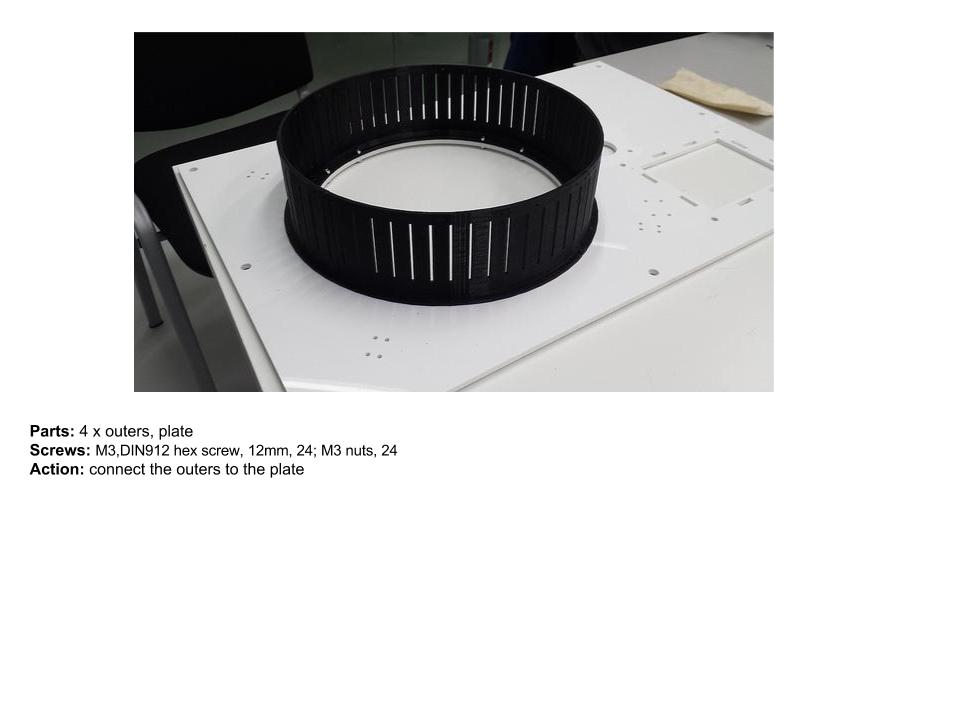
    Cut the published 600 x 400 mm acrylic plates. The source specifies 5 mm acrylic for most plates and 6 mm for the upper gear, so material thickness is part of the mechanism geometry.

    YOU
  2. Assemble the knitting mechanics

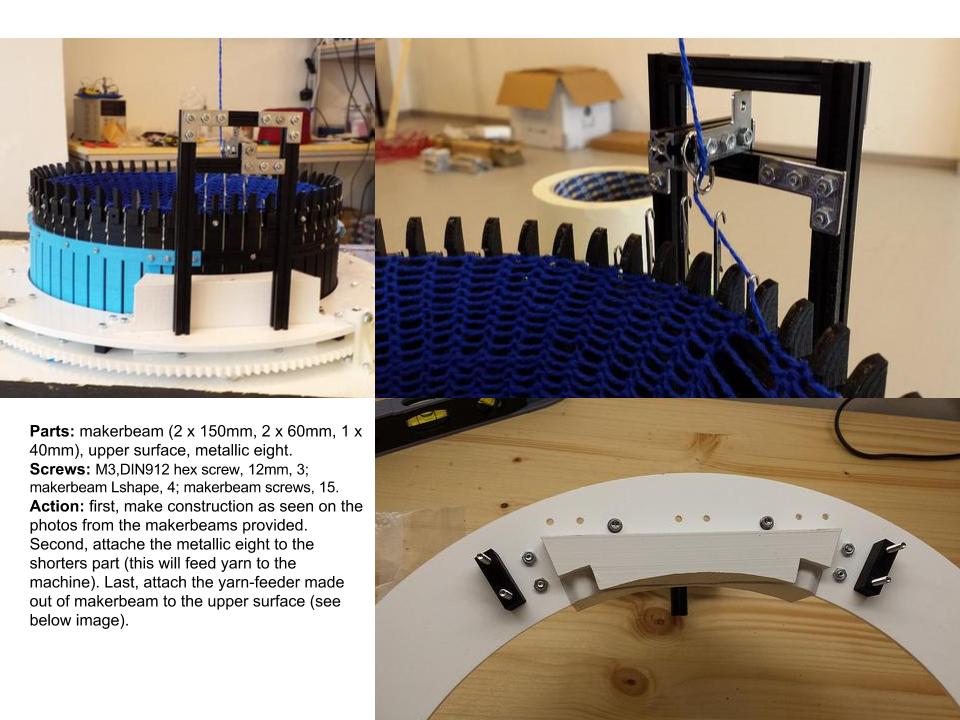
    Build the frame, gear train, needle ring and yarn path from the documented parts. Smooth movement and repeatable needle action matter before electronics are added.

    YOU

3Configure and test

  1. Add Arduino motion control

    Wire the motor/control hardware and start from the published Arduino code. AI can help modernise libraries, pins or motion logic, but the first objective is reproducing the documented movement.

    AI + YOU
  2. Thread, tune and prove a continuous knit

    Load yarn, adjust tension and manually observe several rotations before leaving the machine to run. The original installation used multiple machines over eight months, but a new build still needs its own mechanical tuning.

    YOU

Benchmark this project

Use the Circular Knitic prompt. Compare what different models deliver, then add what happened when you tried it.

Try this benchmark
View the project prompt

CAIBI adaptation · Prompt 1.0 · Project source

Open and copy prompt →

Benchmark results 0

No reviewed results yet for Circular Knitic. Add the first result →

AI IN THIS PROJECT

Get AI help on this build

CAIBI · AI CAN HELP

AI can help with

  • Interpret legacy documentation
  • Arduino changes
  • Parametric part edits
  • Pattern and process planning
CAIBI · AI CAN'T DO

You still need to

  • Source knitting hardware
  • Print precisely
  • Laser cut acrylic
  • Assemble mechanics
  • Thread and tune the machine
Original source AI use and prompts
SOURCEThe original project does not publish an AI prompt

The prompts below are CAIBI helpers for this build. They are not presented as instructions from the creator.

CAIBI STARTING PROMPTS

Copy a prompt for this build

Each prompt tells AI to keep the original project source as the reference and to flag anything you must verify on the real build.

Ways to take it further
AFTER THE FIRST BUILD

Ways to take it further

Parametric OpenSCAD partsAlternative contemporary controllerPattern-generation experimentsDifferent yarn and needle setupsEnclosure or guardingMachine-status sensing
More routes and resources
OTHER WAYS TO GET THERE

You do not have to follow one route.

REVIEWED RESOURCES

Useful places beyond the main source

SOURCE · CAIBI · BUILDERS

What supports the verdict

SOURCEVarvara Guljajeva & Mar Canet

Original open-hardware repository includes BOM, Arduino code, STL files, laser-cut files, workshop material and a full documentation PDF. The design dates from 2014, so current sourcing should be rechecked.

Open source ↗
CAIBIBUILD FOR THE EXPERIENCE

This is exactly the kind of project that broadens AI-assisted making beyond electronics. The machine itself is physical textile fabrication, while AI can help adapt patterns, parametric parts, control logic and obsolete sourcing.

Evidence: Moderate

Leave a build review
HAVE YOU MADE THIS?

Leave a build review.

First-hand evidence improves the assessment
What we want to know

What happened when you actually tried to make it.

  • Did it work?
  • Actual time and cost
  • What did you change?
  • What was harder than the source suggested?
  • Would you build it again?