

RECENTLY CHECKED
All projects →
CAIBI ASSESSMENT

PAROL6 Desktop Robot Arm

CAIBI VERDICTBUILD FOR THE EXPERIENCE

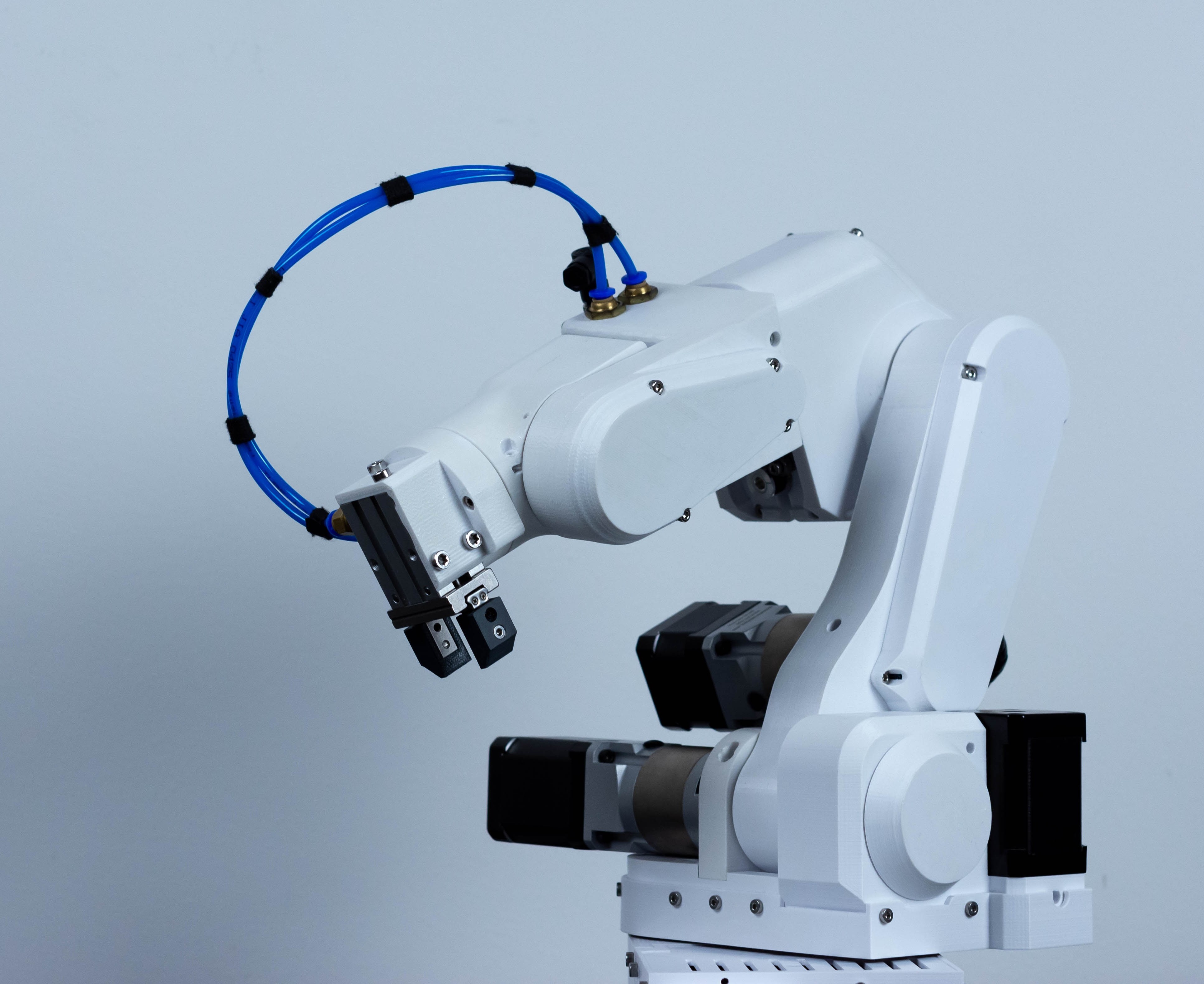
A six-axis open desktop robot arm with printable structure, a published BOM, control electronics, GUI, Python API and ROS2/MoveIt routes.

Build or buy?

Compare the documented build with the purchase reference.

Build it yourself

Configuration prices£1,022 / £2,044Choose configuration to budgetPartial kit / kit; choose a configuration first
Time
Not published
Difficulty
5/5
Physical processes
3D printer · Electronics · Mechanical assembly · Robotics software
See build requirements →

Purchase reference

Buy price referencePrice not checkedNo priced alternative recorded

Check the source for the exact model, availability and what is included.

Check comparison evidence →
Purchase comparison not yet priced
What the prices cover

Current Source Robotics kit figures already recorded by CAIBI, converted from EUR for planning.

Includes: Selected Source Robotics kit route.

Not included: 3D printer where required; PC/ROS workstation; Optional tooling and shipping.

Build evidence recorded 4 Sep 2026. Currency conversions are approximate.

Industrial and educational six-axis arms vary widely in payload, reach, safety systems and software. CAIBI will not turn that spread into a headline saving without a matched alternative.

BUILD AT A GLANCE

Source view and main parts

Check the source ↗
PAROL6 Desktop Robot ArmPAROL6 Desktop Robot Arm · Source Robotics ↗
PHYSICAL BUILD6 key parts or groups
No.Source specification
01Large set of 3D printed structural and joint components from the published STL package
02Six-axis stepper-driven joint hardware
03PAROL6 control board or a compatible self-built control route
04Power hardware and wiring specified by the current BOM and safety documentation
05Computer running PAROL6 Commander or supported Python / ROS2 tooling
06Optional gripper or other end effector
Full source specifications
  1. Large set of 3D printed structural and joint components from the published STL package
  2. Six-axis stepper-driven joint hardware, belts, bearings, pulleys and fasteners from the current BOM
  3. PAROL6 control board or a compatible self-built control route
  4. Power hardware and wiring specified by the current BOM and safety documentation
  5. Computer running PAROL6 Commander or supported Python / ROS2 tooling
  6. Optional gripper or other end effector

TOOLS / PROCESSES4 involved
  • 3D printer
  • Electronics
  • Mechanical assembly
  • Robotics software
The real-world workYOU STILL HAVE TOThe real-world work
  • Source the BOM
  • Print and assemble joints
  • Wire power and control hardware
  • Calibrate axes
  • Test safely
THE BUILD SEQUENCE

How it comes together

1Preparation

  1. Read the safety document and choose a sourcing route

    PAROL6 is available as parts, partial kit, full kit or finished robot. Before self-sourcing, read the current safety warning and the complete BOM rather than mixing older forks or parts lists.

    YOU
  2. Print and inspect the mechanical parts

    Produce the published parts using the project print table, then reject distorted or poor-fitting joint parts before assembly. The robot depends on repeatable joint geometry rather than cosmetic prints.

    YOU

2Build and assembly

  1. Build the six mechanical axes

    Assemble bearings, belts, pulleys, motors and fasteners in the published sequence. Verify free movement and mechanical limits at each joint before adding powered motion.

    YOU
  2. Install control and power electronics

    Fit the control board, motor connections and power hardware according to the current documentation. This is safety-critical electrical work and should not be improvised from AI-generated wiring.

    YOU

3Configure and test

  1. Bring up and calibrate the robot

    Use the supplied test code and Commander software to verify one axis at a time, establish directions and limits, then complete the required calibration before multi-axis movement.

    AI + YOU
  2. Add higher-level control only after the baseline is safe

    Once the stock robot operates repeatably, use the Python API, ROS2/MoveIt or custom vision/automation. This is where AI can contribute heavily without being allowed to guess about physical safety.

    AI + YOU

Benchmark this project

Use the PAROL6 Desktop Robot Arm prompt. Compare what different models deliver, then add what happened when you tried it.

Try this benchmark
View the project prompt

CAIBI adaptation · Prompt 1.0 · Project source

Open and copy prompt →

Benchmark results 0

No reviewed results yet for PAROL6 Desktop Robot Arm. Add the first result →

AI IN THIS PROJECT

Get AI help on this build

CAIBI · AI CAN HELP

AI can help with

  • Control-code investigation
  • Python integration
  • ROS2 and MoveIt help
  • Diagnostics and automation logic
CAIBI · AI CAN'T DO

You still need to

  • Source the BOM
  • Print and assemble joints
  • Wire power and control hardware
  • Calibrate axes
  • Test safely
Original source AI use and prompts
SOURCEThe original project does not publish an AI prompt

The prompts below are CAIBI helpers for this build. They are not presented as instructions from the creator.

CAIBI STARTING PROMPTS

Copy a prompt for this build

Each prompt tells AI to keep the original project source as the reference and to flag anything you must verify on the real build.

Ways to take it further
AFTER THE FIRST BUILD

Ways to take it further

Python-controlled workflowsROS2 / MoveIt integrationVision systemsLEAP motion controlCustom grippersAlternative end effectors
More routes and resources
OTHER WAYS TO GET THERE

You do not have to follow one route.

REVIEWED RESOURCES

Useful places beyond the main source

SOURCE · CAIBI · BUILDERS

What supports the verdict

SOURCESource Robotics

Source Robotics actively maintains the PAROL6 repository with BOM, STL files, build instructions, control-board software, Python API, ROS2/MoveIt resources and explicit safety documentation.

Open source ↗
CAIBIBUILD FOR THE EXPERIENCE

It is a serious robotics platform rather than a novelty arm. The open mechanics, control stack, Python API and ROS2 ecosystem give AI useful software work after the physical machine is correctly assembled.

Evidence: Strong

Leave a build review
HAVE YOU MADE THIS?

Leave a build review.

First-hand evidence improves the assessment
What we want to know

What happened when you actually tried to make it.

  • Did it work?
  • Actual time and cost
  • What did you change?
  • What was harder than the source suggested?
  • Would you build it again?