
RECENTLY CHECKED
All projects →
CAIBI ASSESSMENT

OpenBike Rev4

CAIBI VERDICTWORTH CONSIDERING

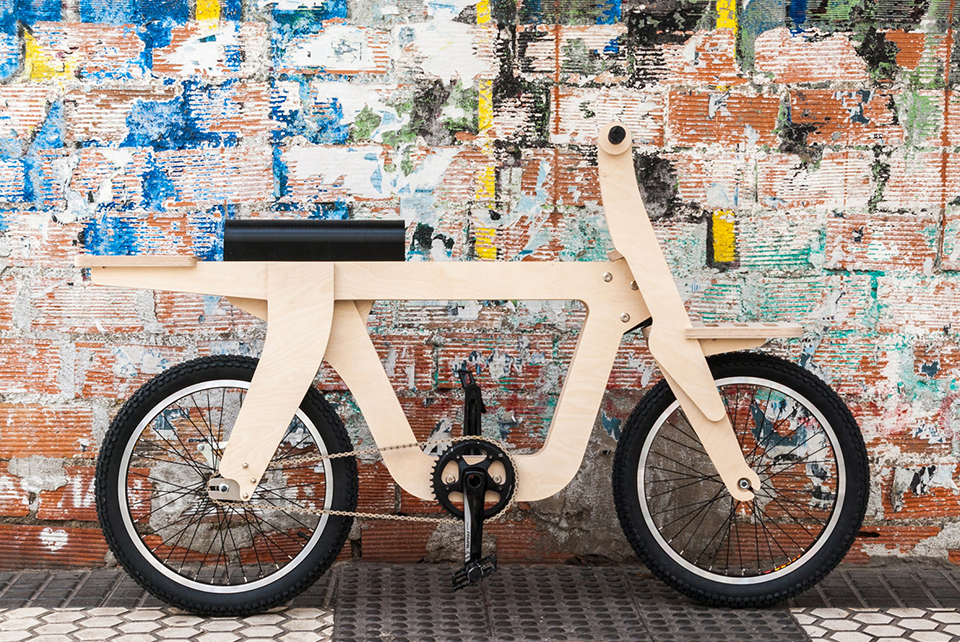
An open wooden bicycle whose frame parts are CNC-cut locally, with additional printed parts and conventional bicycle components assembled into a usable physical vehicle.

Build or buy?

Compare the documented build with the purchase reference.

Build it yourself

Build estimate£350–£800CAIBI estimate · low confidenceOne bicycle; standard components and modest CNC allowance
Time
Not currently published by the source
Difficulty
4/5
Physical processes
CNC router · 3D printer · Mallet · Allen keys · Bicycle assembly tools · Measuring and inspection tools
See build requirements →

Purchase reference

Buy price referencePrice not checkedNo priced alternative recorded

Check the source for the exact model, availability and what is included.

Check comparison evidence →
Purchase comparison not yet priced
What the prices cover

Broad planning allowance for plywood/CNC fabrication, printed parts and conventional bicycle components. Local CNC access and reused cycle parts can move the result far outside this range.

Includes: Frame sheet material; CNC fabrication allowance; Printed parts; Typical bicycle component allowance.

Not included: Owned workshop machinery; Premium drivetrain/wheels; Finishing labour and shipping.

Build evidence recorded 4 Sep 2026. Currency conversions are approximate.

The build cost changes dramatically with local CNC access, reused cycle components and specification. Comparing it with a mass-produced bicycle would mostly measure production scale rather than the project.

BUILD AT A GLANCE

Source view and main parts

Check the source ↗
PHYSICAL BUILD11 key parts or groups
No.Source specification
0121 mm birch plywood for the main fabricated wooden structure
025 mm aluminium plate
03TPU filament for printed parts
04Carbon-fibre PLA filament as listed by the Rev4 source
05Wood glue
06BB86 press-fit bottom bracket
07Single-speed crankset with 24 mm spindle and 50-tooth chainring
08Chain and flat pedals
091 1/8 inch steering/headset components
1020 inch front and coaster-brake rear wheels as specified by the current Rev4 source
1118-tooth sprocket and required fasteners

Full source specifications
  1. 21 mm birch plywood for the main fabricated wooden structure
  2. 5 mm aluminium plate
  3. TPU filament for printed parts
  4. Carbon-fibre PLA filament as listed by the Rev4 source
  5. Wood glue
  6. BB86 press-fit bottom bracket
  7. Single-speed crankset with 24 mm spindle and 50-tooth chainring
  8. Chain and flat pedals
  9. 1 1/8 inch steering/headset components
  10. 20 inch front and coaster-brake rear wheels as specified by the current Rev4 source
  11. 18-tooth sprocket and required fasteners
TOOLS / PROCESSES6 involved
  • CNC router
  • 3D printer
  • Mallet
  • Allen keys
  • Bicycle assembly tools
  • Measuring and inspection tools
The real-world workYOU STILL HAVE TOThe real-world work
  • Source structurally suitable plywood, aluminium and bicycle components
  • Prepare and supervise CNC machining
  • 3D print the required parts
  • Inspect every machined and printed component
  • Assemble and align the frame, fork, steering and drivetrain
  • Set up and verify brakes and wheels
  • Make the final safety and road-use decision
THE BUILD SEQUENCE

How it comes together

1Preparation

  1. Choose Rev4 and obtain the source manufacturing package

    Use the current OpenBike Rev4 source rather than mixing earlier revision files. Review the assembly manual and fabrication data before buying material or modifying geometry.

    AI + YOU
  2. Map the full material and bicycle-component requirement

    Separate CNC sheet material, printed parts and conventional bicycle hardware. AI can help cross-check the list, but compatibility and structural suitability must be confirmed against the physical components.

    AI + YOU
  3. Prepare the CNC work from the supplied design data

    Confirm material thickness, tool diameter, workholding, zero position and CAM interpretation before cutting. Do not casually alter load-bearing or steering geometry because a generated change looks plausible.

    AI + YOU

2Build and assembly

  1. Machine and inspect the plywood and aluminium parts

    Cut the source parts on suitable CNC equipment, then inspect dimensions, edge condition, hole fit and any damaged or weak material before assembly.

    YOU
  2. Print the required polymer parts

    Print the Rev4 polymer components using the source material route. Check orientation, layer integrity and fit on the actual mating parts rather than accepting a successful print as proof of suitability.

    YOU
  3. Assemble frame, fork and steering interfaces

    Follow the source manual carefully around the steering and frame interfaces. Independent fablab experience shows that steering-axis fit can become a real iterative fabrication problem rather than a simple bolt-together step.

    YOU

3Configure and test

  1. Install wheels, drivetrain and controls

    Fit the wheels, bottom bracket, crank, chain, sprocket, pedals and all steering/braking hardware. Verify alignment, free movement, fastener security and braking function mechanically.

    YOU
  2. Inspect before any riding load is applied

    Check frame joints, steering play, wheel retention, brake operation, tyre condition and component clearances. Any first ride should only follow a competent real-world inspection; AI cannot certify the finished vehicle.

    YOU

Benchmark this project

Use the OpenBike Rev4 prompt. Compare what different models deliver, then add what happened when you tried it.

Try this benchmark
View the project prompt

CAIBI adaptation · Prompt 1.0 · Project source

Open and copy prompt →

Benchmark results 0

No reviewed results yet for OpenBike Rev4. Add the first result →

AI IN THIS PROJECT

Get AI help on this build

CAIBI · AI CAN HELP

AI can help with

  • Explain the source BOM and fabrication sequence
  • Help map source dimensions into CNC/CAM preparation
  • Compare reusable bicycle components with source requirements
  • Help reason through non-safety-critical customisation before cutting
  • Troubleshoot assembly observations against the documented geometry
CAIBI · AI CAN'T DO

You still need to

  • Source structurally suitable plywood, aluminium and bicycle components
  • Prepare and supervise CNC machining
  • 3D print the required parts
  • Inspect every machined and printed component
  • Assemble and align the frame, fork, steering and drivetrain
  • Set up and verify brakes and wheels
  • Make the final safety and road-use decision
Original source AI use and prompts
SOURCEThe original project does not publish an AI prompt

The prompts below are CAIBI helpers for this build. They are not presented as instructions from the creator.

CAIBI STARTING PROMPTS

Copy a prompt for this build

Each prompt tells AI to keep the original project source as the reference and to flag anything you must verify on the real build.

Ways to take it further
AFTER THE FIRST BUILD

Ways to take it further

Rev1, Rev2 and Rev3 historical OpenBike variantsLocal material and finish choices within source constraintsReuse of compatible donor bicycle componentsCargo-rack use on Rev4Cosmetic and non-safety-critical personalisation
More routes and resources
OTHER WAYS TO GET THERE

You do not have to follow one route.

REVIEWED RESOURCES

Useful places beyond the main source

SOURCE · CAIBI · BUILDERS

What supports the verdict

SOURCEArquimaña / OpenBike

The current OpenBike site still publishes the Rev4 route, materials, tools and downloadable manufacturing/assembly access. Independent coverage confirms the distributed CNC/3D-print concept, and a fablab build log documents real fit and steering work on an OpenBike-family build. CAIBI has not independently road-tested Rev4, so structural and roadworthiness claims remain outside the verified layer.

Open source ↗
CAIBIWORTH CONSIDERING

OpenBike is a strong example of data becoming a large, useful physical object without a conventional factory supply chain. AI can help inspect fabrication files, explain assembly, adapt non-safety-critical geometry and reason through sourcing. The main reason to build is local fabrication, learning, repairability and design control, not a guaranteed saving over buying a bicycle.

Evidence: Moderate

Leave a build review
HAVE YOU MADE THIS?

Leave a build review.

First-hand evidence improves the assessment
What we want to know

What happened when you actually tried to make it.

  • Did it work?
  • Actual time and cost
  • What did you change?
  • What was harder than the source suggested?
  • Would you build it again?