
RECENTLY CHECKED
All projects →
CAIBI ASSESSMENT

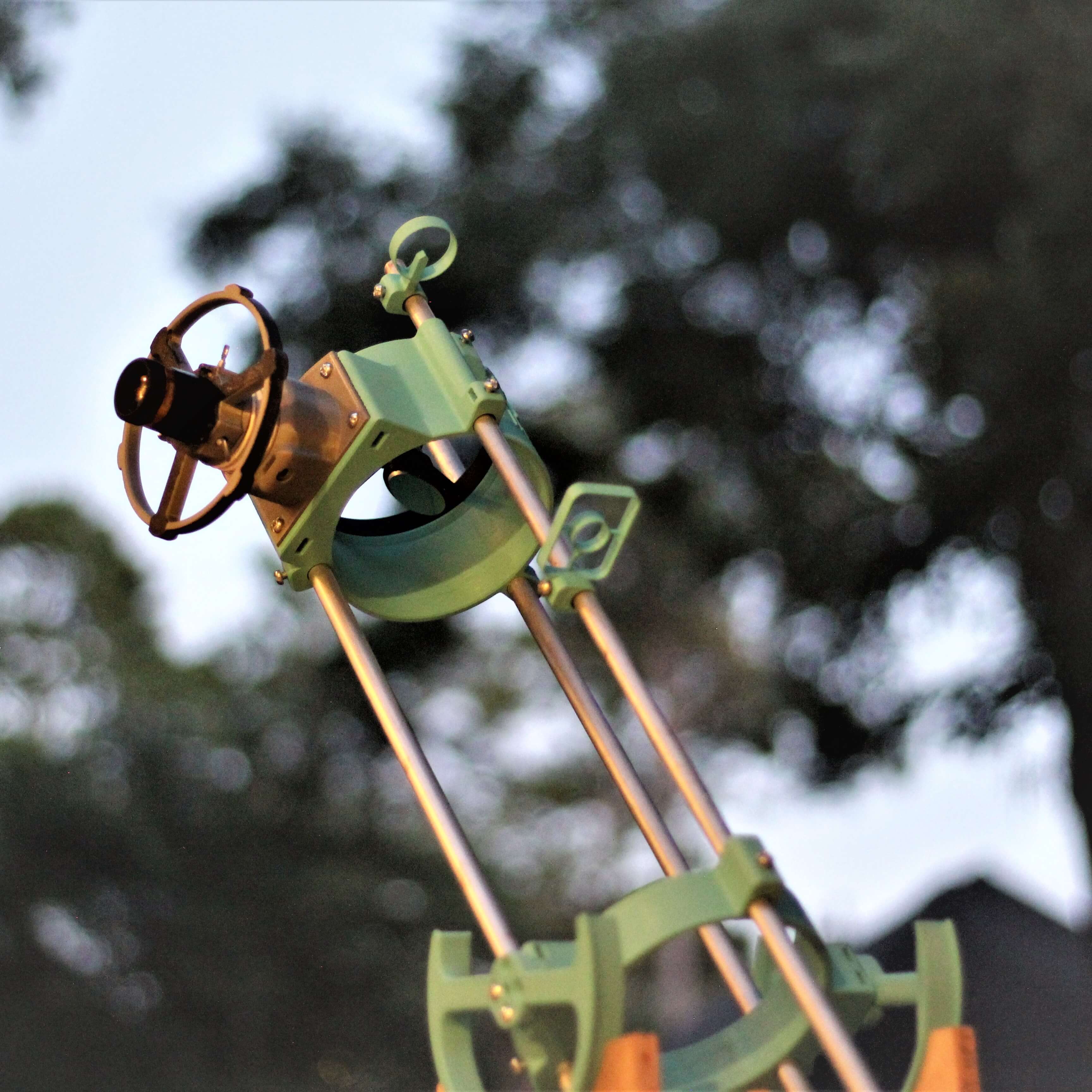
Hadley Telescope

CAIBI VERDICTBUILD IT

A 3D-printable 114/900 mm Newtonian reflector that combines inexpensive commodity optics with printed structure, metal rods and a simple mount.

Build or buy?

Compare the documented build with the purchase reference.

Build it yourself

Build estimate£74–£111Source estimate · high confidenceOne telescope; basic optics and mount route
Time
Multi-day including printing; physical assembly is comparatively simple
Difficulty
3/5
Physical processes
3D printer · Basic hand tools · Optics
See build requirements →

Purchase reference

Buy price reference£194Sky-Watcher Heritage 130PRecorded 5 Sep 2026

Check the source for the exact model, availability and what is included.

Check comparison evidence →
Build estimate is lower
What the prices cover

Current source and builder evidence consistently place the usual build around $100 to $150 depending on optics, eyepieces and mount.

Includes: Optics; Printed structure; Common hardware; Basic mount route.

Not included: Premium eyepieces; Upgraded focuser/finder; 3D printer ownership.

Build evidence recorded 4 Sep 2026. Currency conversions are approximate.

Sky-Watcher Heritage 130P is a useful bought reference for a capable compact beginner reflector, but it is not optically or mechanically identical to Hadley.

UK purchase/source reference ↗US purchase/source reference ↗
BUILD AT A GLANCE

Source view and main parts

Check the source ↗
PHYSICAL BUILD10 key parts or groups
No.Source specification
01114 mm diameter
02Matching elliptical secondary mirror
031.25 inch eyepiece route
043D printed lower cell
05Three long metal rods or the equivalent specified by the chosen imperial or metric variant
06Single-family screw and nut hardware matching the original or official metric remix
07Springs and adjustment hardware for the primary mirror cell
08Adhesive and basic finishing materials
09Stable Dobsonian
10Optional shroud or baffle for stray-light control
Full source specifications
  1. 114 mm diameter, 900 mm focal-length spherical primary mirror
  2. Matching elliptical secondary mirror
  3. 1.25 inch eyepiece route, with suitable low and higher power eyepieces
  4. 3D printed lower cell, centre structure, upper structure, spider, focuser and related hardware
  5. Three long metal rods or the equivalent specified by the chosen imperial or metric variant
  6. Single-family screw and nut hardware matching the original or official metric remix
  7. Springs and adjustment hardware for the primary mirror cell
  8. Adhesive and basic finishing materials
  9. Stable Dobsonian, pipe or other suitable altitude/azimuth mount
  10. Optional shroud or baffle for stray-light control
TOOLS / PROCESSES3 involved
  • 3D printer
  • Basic hand tools
  • Optics
The real-world workYOU STILL HAVE TOThe real-world work
  • Print and inspect the structural parts
  • Source and handle the mirrors
  • Assemble the optical tube
  • Build or fit a stable mount
  • Collimate on the real optics
  • Observe safely and verify focus
THE BUILD SEQUENCE

How it comes together

1Preparation

  1. Choose the imperial or official metric route first

    Use one complete hardware standard rather than mixing variants. Metric builders should start with the endorsed M4 remix and print its hardware tolerance test before committing to the full set.

    AI + YOU
  2. Source the optics before committing the structure

    Confirm an actual 114/900 mm primary and matching secondary. The design depends on this optical geometry, and marketplace price or availability can vary significantly from the original low-cost examples.

    YOU
  3. Print and inspect the telescope parts

    Use the creator-supplied orientations and print guidance. Clear screw holes, reject warped structural parts and verify the spider, mirror cell and focuser fit before installing glass.

    YOU

2Build and assembly

  1. Build the open optical tube assembly

    Join the printed sections with the long rods, fit the primary cell, spider, secondary and focuser, and keep the mirrors protected from tools, fingerprints and accidental loads.

    YOU
  2. Put it on a genuinely stable mount

    The creator now recommends established Hill, Marci or EMT remix routes and still regards a good wooden mount as an excellent option. A weak tripod or loose bearing can make good optics feel unusable.

    YOU
  3. Collimate and balance the real telescope

    Align the secondary and primary optical axes, set the focuser position and balance the tube on its mount. AI can explain the procedure, but only observation through the physical instrument proves that the alignment is correct.

    AI + YOU

3Configure and test

  1. Prove it on forgiving targets first

    Start with the Moon or a bright planet using a sensible eyepiece. Confirm focus, tracking feel and image quality before adding higher magnification, phone adapters, cameras or motorised tracking.

    AI + YOU
  2. Control stray light and observe safely

    Add a shroud or baffle where local lights contaminate the open optical path. Never point Hadley at the Sun without a correctly engineered full-aperture solar solution; the creator specifically warns that the open frame can focus sunlight outside the nominal optical path as well.

    YOU

Benchmark this project

Use the Hadley Telescope prompt. Compare what different models deliver, then add what happened when you tried it.

Try this benchmark
View the project prompt

CAIBI adaptation · Prompt 1.0 · Project source

Open and copy prompt →

Benchmark results 0

No reviewed results yet for Hadley Telescope. Add the first result →

AI IN THIS PROJECT

Get AI help on this build

CAIBI · AI CAN HELP

AI can help with

  • Interpret the build manual
  • Help adapt imperial and metric hardware
  • Explain Newtonian alignment and collimation
  • Troubleshoot print tolerance and fit
  • Help plan mount and focuser upgrades
CAIBI · AI CAN'T DO

You still need to

  • Print and inspect the structural parts
  • Source and handle the mirrors
  • Assemble the optical tube
  • Build or fit a stable mount
  • Collimate on the real optics
  • Observe safely and verify focus
Original source AI use and prompts
SOURCEThe original project does not publish an AI prompt

The prompts below are CAIBI helpers for this build. They are not presented as instructions from the creator.

CAIBI STARTING PROMPTS

Copy a prompt for this build

Each prompt tells AI to keep the original project source as the reference and to flag anything you must verify on the real build.

Ways to take it further
AFTER THE FIRST BUILD

Ways to take it further

Official M4 metric buildWooden Dobsonian mountHill, Marci or EMT mount remixesCrayford or improved helical focuserFinder or red-dot sightPhone adapterStray-light shroudMotorised altitude, azimuth and focus experiments
More routes and resources
OTHER WAYS TO GET THERE

You do not have to follow one route.

REVIEWED RESOURCES

Useful places beyond the main source

SOURCE · CAIBI · BUILDERS

What supports the verdict

SOURCEMaff / Printables

Current Printables source, downloadable assembly manual and officially endorsed metric remix verified. The creator reports hundreds of confirmed builds and a much larger estimated installed base; multiple independent builders from 2022 to 2026 corroborate successful first-telescope use and the main practical trade-offs.

Open source ↗
CAIBIBUILD IT

Hadley is a strong example of AI helping with a physical build without being the point of the project. The source is mature, widely replicated and deliberately designed around simple hardware, while AI can help interpret the manual, adapt metric parts, troubleshoot prints and explain collimation. The actual telescope still succeeds or fails on printed tolerances, mirror handling, alignment and the quality of the mount.

Evidence: Strong

Leave a build review
HAVE YOU MADE THIS?

Leave a build review.

First-hand evidence improves the assessment
What we want to know

What happened when you actually tried to make it.

  • Did it work?
  • Actual time and cost
  • What did you change?
  • What was harder than the source suggested?
  • Would you build it again?