A modular open laboratory syringe-pump platform with a compact mechanical pump, a separate controller and serial control for repeatable research fluid handling.
Compare the documented build with the purchase reference.
Build it yourself
Known parts cost£203Build total not establishedOne pump and controller; power and fluid-path consumables extra
Time
The source states less than 10 minutes for pump assembly once the fabricated and sourced parts are ready; procurement, fabrication, electronics, setup and calibration are additional.
Difficulty
4/5
Physical processes
FDM printer or print service · Metal fabrication access for the bent aluminium frame · Electronics assembly tools · Hex and hand tools
Purchase comparison not yet pricedWhat the prices cover
The current v4 documentation estimates about $175 per pump plus $100 per controller. CAIBI combines those source figures for a one-pump first setup and uses the dated 4 Sep 2026 FX research snapshot for the approximate GBP display. One controller can serve up to four pumps, so multi-pump economics differ.
Includes: Source-estimated one v4 pump hardware route; Source-estimated one controller hardware route.
Not included: Shipping and taxes; Bent aluminium and FDM fabrication service or owned fabrication equipment; Electronics assembly labour or outsourced controller assembly; 12 V power supply if not already owned; Syringe, tubing and experiment-specific fluid-path consumables; Calibration equipment and operator time.
Build evidence recorded 5 Sep 2026. Currency conversions are approximate.
Commercial laboratory pumps vary materially in channel count, calibration, accuracy claims, fluid-path compatibility, support and validation. The open v4 source also shares one controller across up to four pumps. CAIBI therefore records the source build economics without converting an unlike commercial pump price into a savings claim.
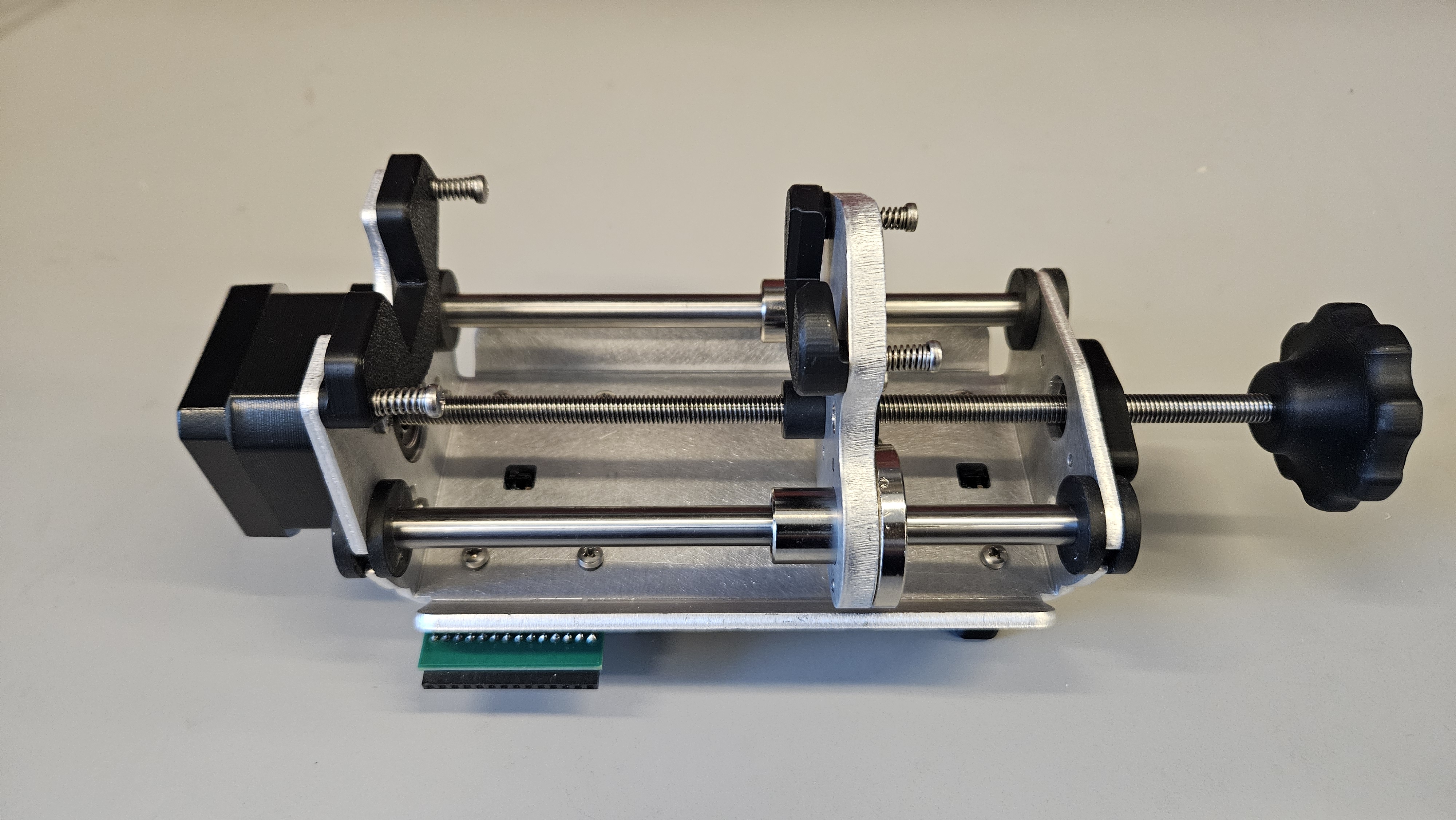
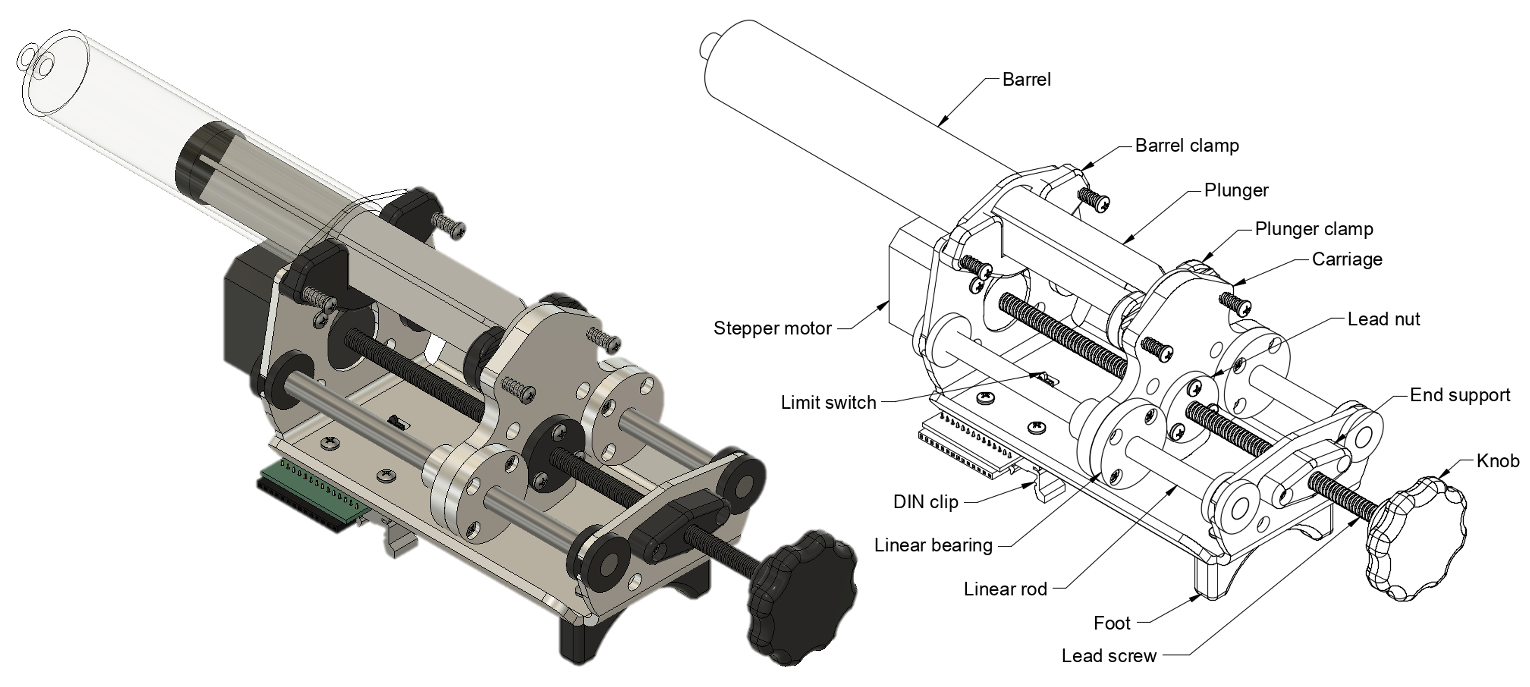
Bent aluminium pump frame and current v4 fasteners
02
FDM printed syringe clamps
03
Stepper motor
04
Integrated pull and push limit switches
05
Controller PCB with TMC5041 motor drive and user-interface electronics
06
Display
07
Connector module for the selected power and communication route
08
12 V supply for the source-safe baseline configuration
09
Syringe plus experiment-specific tubing
Full source specifications
Bent aluminium pump frame and current v4 fasteners
FDM printed syringe clamps, carriage and related mechanical parts
Stepper motor, 2 mm pitch leadscrew, linear shaft and bearings
Integrated pull and push limit switches
Controller PCB with TMC5041 motor drive and user-interface electronics
Display, buttons and rotary encoder
Connector module for the selected power and communication route
12 V supply for the source-safe baseline configuration
Syringe plus experiment-specific tubing, outlet and fluid-path consumables
TOOLS / PROCESSES4 involved
FDM printer or print service
Metal fabrication access for the bent aluminium frame
Electronics assembly tools
Hex and hand tools
The real-world workYOU STILL HAVE TOThe real-world work
Source or fabricate the exact v4 bent aluminium and printed mechanical parts
Assemble the rods, bearings, leadscrew, carriage, clamps, stepper and limit switches
Build or source the controller electronics and inspect every connection before power is applied
Use the source-safe 12 V route unless the experiment genuinely requires and validates a different supported setup
Fit the real syringe and fluid path and check clearances, loading and limit-switch operation
Calibrate delivered volume and flow with the actual syringe, tubing and fluid
Manage experiment-specific physical, fluid and contamination risks
Validate suitability for the intended research process rather than assuming an open design is a certified instrument
THE BUILD SEQUENCE
How it comes together
1Preparation
Lock the v4 route before ordering
Use the current v4 branch and documentation rather than mixing older v2 or v3 mechanical parts into the build. The design changed materially in August 2025 and now uses 49 parts, a bent aluminium frame and FDM printed components.
AI + YOU
Fabricate the pump mechanics
Prepare the source-specified aluminium frame and printed parts, then inspect hole positions, bearing fits and leadscrew alignment before assembly. The published short assembly time starts after this fabrication and sourcing work is complete.
YOU
Assemble the pump and limits
Install the stepper, leadscrew, guide shaft, carriage, syringe clamps and pull/push limit switches. Confirm free travel by hand and make sure a limit switch will act before the carriage can force the syringe beyond its intended travel.
YOU
2Build and assembly
Build and inspect the controller
Assemble or source the current controller and connector module, then inspect orientation, connectors and wiring before power. A single controller can run up to four pumps, so label channels and cables before expanding the system.
YOU
Load software and prove motion
Install the current software route, configure the selected connector and verify manual and serial control with an unloaded or safe test setup before using an experimental fluid path.
AI + YOU
Configure the actual syringe
Enter the real syringe diameter and requested flow or volume values. Use the source equations for planning, but keep theoretical resolution separate from delivered-volume accuracy.
AI + YOU
3Configure and test
Calibrate the complete fluid path
Measure what is actually delivered through the selected syringe, tubing and outlet using the real fluid. The source explicitly notes that tubing elasticity, fluid properties and plunger friction can dominate the theoretical microstep resolution.
YOU
Validate the research workflow
Run repeatability checks at the volumes and flow rates that matter to the experiment, record the result and re-check after changes to syringe size, tubing, fluid, voltage or mechanical setup.
AI + YOU
Benchmark this project
Use the Open Syringe Pump v4 prompt. Compare what different models deliver, then add what happened when you tried it.
Open Syringe Pump v4 is the current Karpova Lab route. The repository default branch is v4, the design was released in August 2025, and the current documentation publishes the v4 cost, assembly and performance model. A 2026 Karpova-led research preprint cites the project for live experimental use, which supports current-use context but is not independent builder validation.
This is a credible open instrument rather than a classroom mock-up. The current v4 route publishes the hardware, software and build documentation, and its controller can run up to four pumps. It is most compelling for research teams that value repairability, custom control and integration with their own experiments. A commercial pump is still the lower-risk choice when procurement support, validated performance or regulated use matters more than openness.
Evidence: Strong
BUILDERSNo published reports yet
Actual time, cost, changes and outcomes appear here after submitted builds are reviewed.


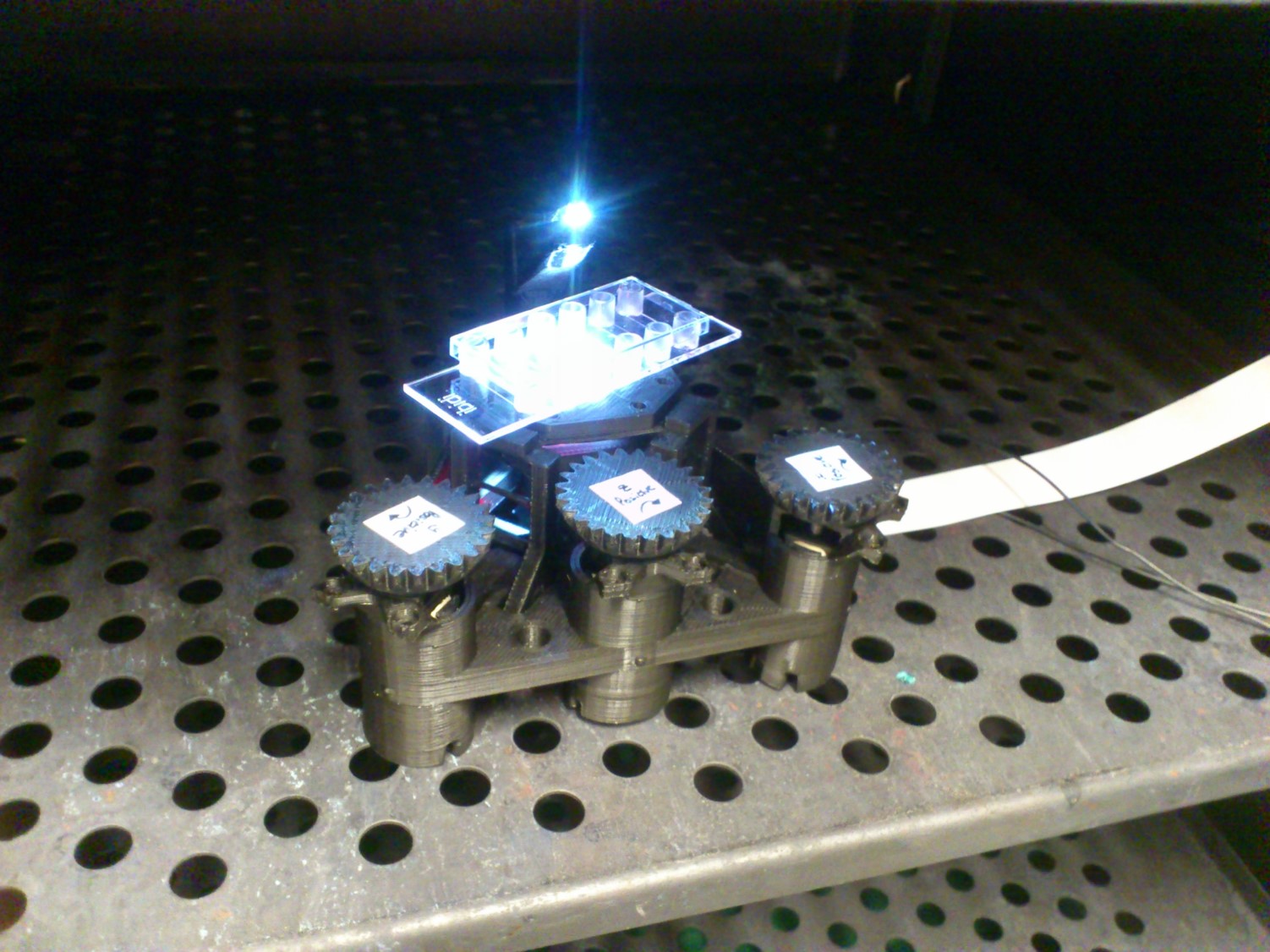 OpenFlexure Microscope
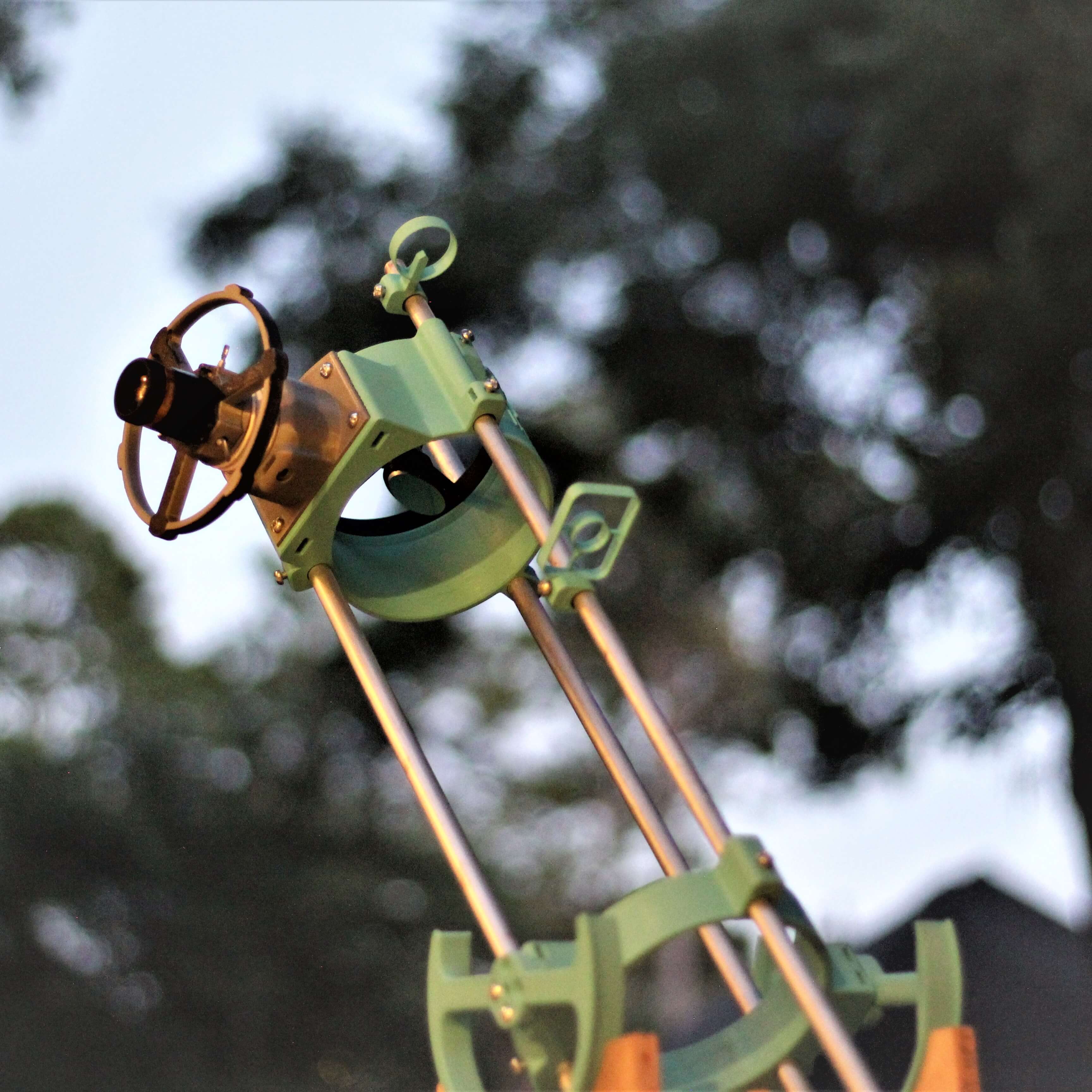 Hadley Telescope
 ESP32 Air Quality Monitor