
RECENTLY CHECKED
All projects →
CAIBI ASSESSMENT

Albert Apron

CAIBI VERDICTBUILD IT

A made-to-measure FreeSewing apron generated from five body measurements, then cut and sewn from ordinary sturdy fabric.

Build or buy?

Compare the documented build with the purchase reference.

Build it yourself

Known parts cost£13–£20Build total not establishedFabric only; thread and other supplies extra
Time
Not published by source
Difficulty
2/5
Physical processes
Sewing machine · Fabric scissors or rotary cutter · Iron · Measuring tape
See build requirements →

Purchase reference

Buy price referencePrice not checkedNo priced alternative recorded

Check the source for the exact model, availability and what is included.

Check comparison evidence →
Purchase comparison not yet priced
What the prices cover

Current UK fabric examples recorded by CAIBI for the source-recommended material quantity.

Includes: About 1.25 m of suitable sturdy fabric.

Not included: Sewing machine; Thread/basic supplies if not owned; Delivery.

Build evidence recorded 4 Sep 2026. Currency conversions are approximate.

The fabric cost is visible, but labour, machine ownership, fit and fabric choice dominate the decision. A generic finished apron is not the same specification.

BUILD AT A GLANCE

Source view and main parts

Check the source ↗
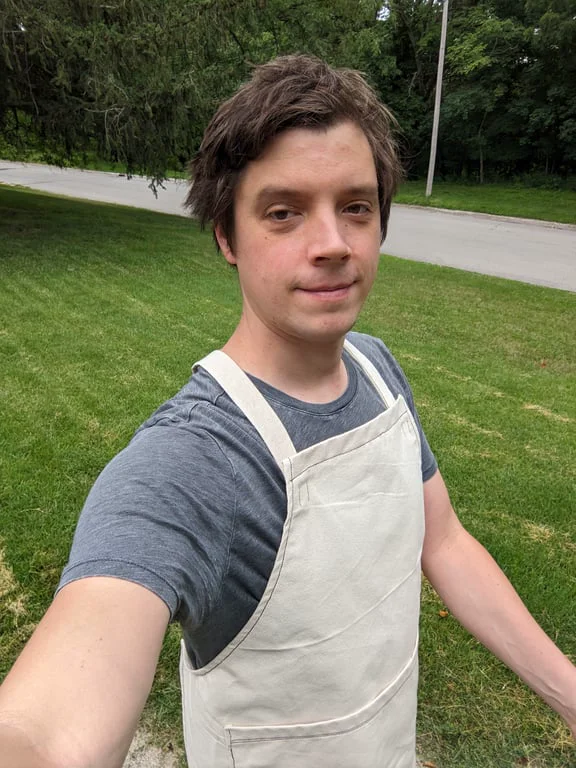
Albert apron sewn by ojensenAlbert apron sewn by ojensen · ojensen / FreeSewing ↗
PHYSICAL BUILD5 key parts or groups
No.Source specification
01About 1.25 m / 1.4 yd of suitable sturdy fabric
02Heavy cotton
03Thread appropriate for the fabric
04Printed
05Optional strap adjusters or other builder modifications
Full source specifications
  1. About 1.25 m / 1.4 yd of suitable sturdy fabric, depending on chosen apron length
  2. Heavy cotton, chino, canvas or non-stretch denim are source-recommended fabric routes
  3. Thread appropriate for the fabric
  4. Printed, projected or paperless Albert pattern generated from the builder measurements
  5. Optional strap adjusters or other builder modifications
TOOLS / PROCESSES4 involved
  • Sewing machine
  • Fabric scissors or rotary cutter
  • Iron
  • Measuring tape
The real-world workYOU STILL HAVE TOThe real-world work
  • Measure the wearer
  • Choose suitable fabric
  • Generate and transfer the pattern
  • Cut fabric accurately
  • Press hems
  • Sew pocket, body and straps
  • Try on and verify fit
THE BUILD SEQUENCE

How it comes together

1Preparation

  1. Measure before generating the pattern

    Record chest circumference, HPS to waist back, waist circumference, waist to knee and hips circumference. AI can explain measurement landmarks, but the numbers must come from the real wearer rather than an estimate.

    YOU
  2. Set the Albert options

    Choose back opening, strap length, bib length, bib width, overall length adjustment and strap width before exporting the pattern. This is the best point for AI-assisted comparison because changes are cheap before fabric is cut.

    AI + YOU
  3. Choose a suitable non-stretch fabric

    Follow the source guidance toward sturdy, tightly woven, washable, heat-resistant natural fibre. Heavy cotton, chino, canvas and non-stretch denim are explicitly recommended.

    YOU

2Build and assembly

  1. Transfer and cut the pattern

    Cut one front on the fold, one pocket on the fold and two straps. Confirm scale and seam-allowance settings before committing the fabric.

    YOU
  2. Prepare and attach the pocket

    Press the pocket allowances, secure the top hem and edgestitch the pocket to the front using the generated guides. This is a contained first operation for a newer sewist.

    YOU
  3. Press and topstitch the apron hems

    Form the side, top and bottom hems in the documented order. Consistent pressing and keeping the folded edge under the topstitching matter more than simply following the digital geometry.

    YOU

3Configure and test

  1. Make and attach the straps

    Sew each strap right sides together, turn and press it, then attach it at the marked positions. FreeSewing also suggests a second tie set as an optional modification if closer back fit is wanted.

    YOU
  2. Try it on and feed the result back into the next version

    Check bib coverage, strap reach, back opening and working movement on the actual wearer. If something is wrong, use the measured outcome to change the next pattern rather than guessing at the sewing machine.

    AI + YOU

Benchmark this project

Use the Albert Apron prompt. Compare what different models deliver, then add what happened when you tried it.

Try this benchmark
View the project prompt

CAIBI adaptation · Prompt 1.0 · Project source

Open and copy prompt →

Benchmark results 0

No reviewed results yet for Albert Apron. Add the first result →

AI IN THIS PROJECT

Get AI help on this build

CAIBI · AI CAN HELP

AI can help with

  • Explain measurements and pattern options
  • Compare bib, strap and length settings
  • Explain sewing terminology and source instructions
  • Help plan fabric layout around a known width
  • Troubleshoot fit or construction from real builder observations
CAIBI · AI CAN'T DO

You still need to

  • Measure the wearer
  • Choose suitable fabric
  • Generate and transfer the pattern
  • Cut fabric accurately
  • Press hems
  • Sew pocket, body and straps
  • Try on and verify fit
Original source AI use and prompts
SOURCEThe original project does not publish an AI prompt

The prompts below are CAIBI helpers for this build. They are not presented as instructions from the creator.

CAIBI STARTING PROMPTS

Copy a prompt for this build

Each prompt tells AI to keep the original project source as the reference and to flag anything you must verify on the real build.

Ways to take it further
AFTER THE FIRST BUILD

Ways to take it further

Longer or shorter apronDifferent bib proportionsLonger crossed strapsBack tie strapsStrap adjustersPocket embroidery or custom pocket treatmentPaperless pattern transfer
More routes and resources
OTHER WAYS TO GET THERE

You do not have to follow one route.

REVIEWED RESOURCES

Useful places beyond the main source

SOURCE · CAIBI · BUILDERS

What supports the verdict

SOURCEFreeSewing

Current FreeSewing documentation provides the measurement set, configurable design options, fabric guidance, cutting instructions and complete sewing route. FreeSewing also maintains a long-running public showcase with repeated real Albert builds. The source image and its provenance are identified in the image caption.

Open source ↗
CAIBIBUILD IT

Albert is a useful counterexample to the idea that AI-assisted making has to mean electronics. The digital value is in turning measurements and options into a bespoke pattern, explaining unfamiliar sewing steps and helping reason about changes before fabric is cut. The physical quality still comes from accurate measuring, fabric choice, cutting, pressing and stitching.

Evidence: Strong

Leave a build review
HAVE YOU MADE THIS?

Leave a build review.

First-hand evidence improves the assessment
What we want to know

What happened when you actually tried to make it.

  • Did it work?
  • Actual time and cost
  • What did you change?
  • What was harder than the source suggested?
  • Would you build it again?