An open CoreXY multi-tool motion platform designed to swap tools automatically for 3D printing, plotting and low-force custom automation, with a substantial science-automation ecosystem.
Compare the documented build with the purchase reference.
Build it yourself
Known parts cost£1,332Build total not establishedMotion platform kit only; working toolheads extra
Time
Current Science Jubilee onboarding estimates 8 hours to 5 working days for base motion-platform assembly and configuration, before application-specific tools and experiments.
Difficulty
5/5
Physical processes
Metric hand tools · Electrical assembly tools · Computer and network setup · 3D printer for many custom tools unless parts are outsourced
Purchase comparison not yet pricedWhat the prices cover
The current Filastruder Jubilee Motion Platform Kit is $1,799.99. CAIBI uses the dated 4 Sep 2026 FX research snapshot for the approximate GBP display. The core repository separately estimates about $1,350 for a self-sourced unit before tools, so these are different procurement routes rather than one blended build price.
Includes: Current Filastruder base frame and motion-platform hardware; Controller, motors and electronics; Base printed parts and labelled platform wiring harnesses.
Not included: All working toolheads such as extruders, syringes, plotters or other process tools; Tool harnesses where not selected separately; Shipping outside the continental US, import taxes and VAT; Application-specific deck, labware and fixtures; Computer, Raspberry Pi or other application-control hardware; Assembly, calibration and process-validation time.
Build evidence recorded 5 Sep 2026. Currency conversions are approximate.
The $1,799.99 Filastruder product supplies the Jubilee base motion platform but explicitly includes no working tools. Conventional 3D printers and laboratory robots solve narrower jobs with different tooling, software, support and validation. CAIBI therefore does not manufacture a build-versus-buy saving from an unmatched product class.
Kinematically coupled 300 x 300 mm bed platform and three-point autotramming hardware
03
Automatic toolchanger and 409 mm horizontal tool-rack system
04
Duet controller and expansion/control electronics for the selected build route
05
Stepper motors
06
Application-specific tool plates
07
Computer and network connection for configuration and automation
08
Optional Science Jubilee deck
Full source specifications
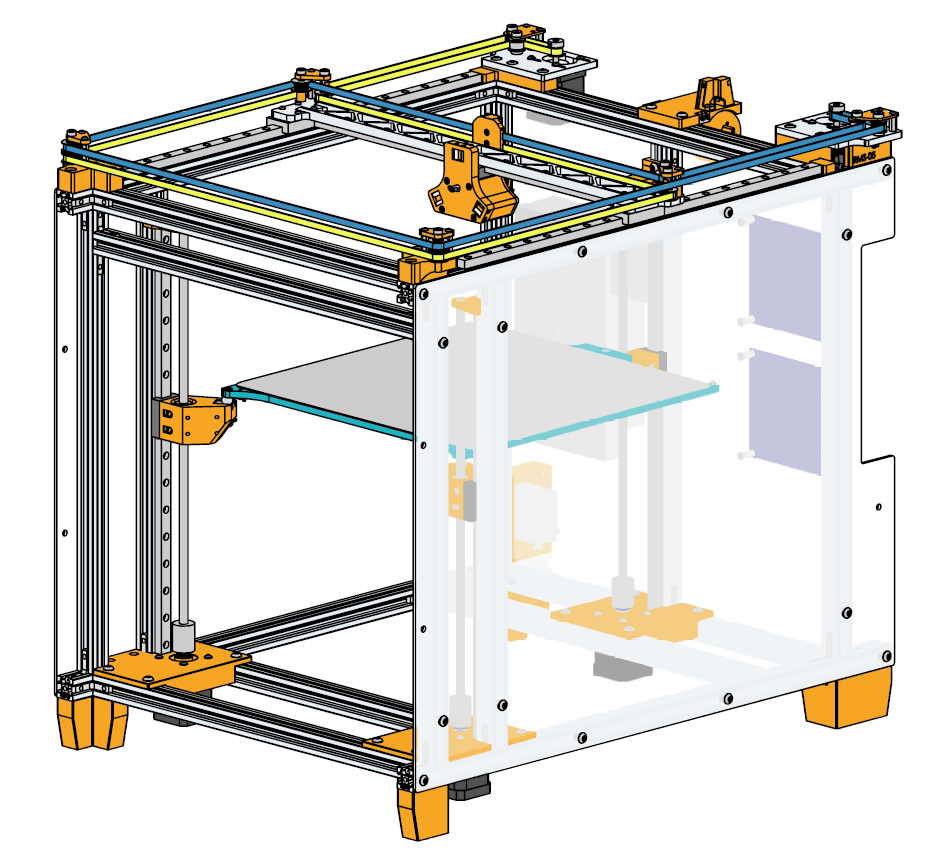
Jubilee V2.2.2 aluminium frame, linear motion and CoreXY hardware
Kinematically coupled 300 x 300 mm bed platform and three-point autotramming hardware
Automatic toolchanger and 409 mm horizontal tool-rack system
Duet controller and expansion/control electronics for the selected build route
Stepper motors, wiring, power supply and current motion-platform harnessing
Application-specific tool plates, toolheads and tool harnesses supplied or built separately
Computer and network connection for configuration and automation
Optional Science Jubilee deck, labware, Raspberry Pi and scientific tools when used for lab automation
TOOLS / PROCESSES4 involved
Metric hand tools
Electrical assembly tools
Computer and network setup
3D printer for many custom tools unless parts are outsourced
The real-world workYOU STILL HAVE TOThe real-world work
Choose the exact base-platform sourcing route and application before buying parts
Assemble and square the frame, rails, CoreXY motion and kinematic bed system
Wire the controller, motors, heaters and power system with mains isolated
Install guards over exposed mains terminals and keep hands clear of belts and moving parts
Configure and commission motion before attaching expensive or hazardous application tools
Build or buy every application-specific toolhead and required harness that the base kit does not include
Calibrate tool pickup, offsets, bed or deck coordinates and the real process
Validate experiment, material or lab-safety requirements that sit outside the open motion-platform design
THE BUILD SEQUENCE
How it comes together
1Preparation
Define the job before the machine
Decide whether Jubilee is being built for multi-material printing, plotting, laboratory automation or another low-force process. The base machine is extensible, but the missing tool, harness and process requirements differ substantially by application.
AI + YOU
Choose self-source or the current base kit
The core repository estimates roughly $1,350 for a self-sourced single unit before tools. The current Filastruder motion-platform kit is $1,799.99 and supplies the frame, controller, motors, electronics, labelled plug-and-play wiring harnesses and printed base parts, but no working Jubilee tools.
AI + YOU
Assemble and square the motion platform
Build the frame, rails, CoreXY motion and kinematic bed according to the stable V2.2.2 source and wiki. Science Jubilee gives a broad 8-hour to 5-working-day onboarding estimate for this base assembly and configuration step.
YOU
2Build and assembly
Wire with mains isolated
Install the Duet electronics, motors, power supply and selected heater or bed route. Current Science Jubilee guidance explicitly warns that the 120/240 V mains terminals are dangerous, recommends terminal guards and says not to connect or disconnect stepper hardware while the control board is powered.
YOU
Commission motion before tools
Load the correct configuration, verify axes, homing, bed behaviour, end conditions and clearances, and prove automatic toolchanging at low consequence before attaching application-specific tools or samples.
AI + YOU
Build the actual tool workflow
Add the required extruder, pen, pipette, syringe, camera or custom tool plus its harness and bed/deck interface. The base kit is not a finished process machine until this application layer exists.
AI + YOU
3Configure and test
Calibrate every tool and coordinate frame
Measure pickup geometry, offsets, deck or bed coordinates and process-specific parameters physically. AI can help with calculations and scripts but cannot feel a failed tool latch, see an unsafe cable route or certify real-world accuracy.
YOU
Validate the end process
Run repeatability and safety checks for the actual printing, plotting or research workflow. A successful motion platform does not automatically validate a liquid-handling protocol, material process or unattended automation setup.
AI + YOU
Benchmark this project
Use the Jubilee V2.2.2 prompt. Compare what different models deliver, then add what happened when you tried it.
The stable core hardware source identifies the current platform as Jubilee V2.2.2. The core repository has not been pushed since May 2024, so CAIBI treats it as a stable hardware release rather than claiming rapid current hardware development. Current 2026 Science Jubilee activity, current Filastruder kit availability and recent research use show that the wider platform ecosystem remains live.
Jubilee makes sense when the motion platform is a foundation for several custom processes rather than a single finished machine. The current source remains a stable V2.2.2 hardware route, Filastruder sells a complete base kit, and Science Jubilee demonstrates that the platform can be extended into real research automation. It is a poor choice for someone who only wants a conventional 3D printer or a turnkey laboratory robot with minimal integration work.
Evidence: Strong
BUILDERSNo published reports yet
Actual time, cost, changes and outcomes appear here after submitted builds are reviewed.



 Gridfinity Rebuilt